APSIRI and SEED NATURE Sign Strategic Cooperation Agreement and Inaugurate Joint Innovation Laboratory for Biodiversity
On October 20, 2026, the Asia-Pacific Social Innovation Research Institute (APSIRI) and SEED NATURE signed a strategic cooperation agreement, inaugurated the Joint Innovation Laboratory for Biodiversity, and announced plans to jointly establish the Journal of Innovation and Development (JID). The partnership will focus on biodiversity conservation, Gross Ecosystem Product (GEP) accounting, ecological value realization, and green industrial innovation. By integrating academic research with practical applications, the collaboration aims to advance interdisciplinary innovation, promote international research and knowledge exchange on China’s ecological sustainability practices, and contribute to green transformation and sustainable development across the Asia-Pacific region.

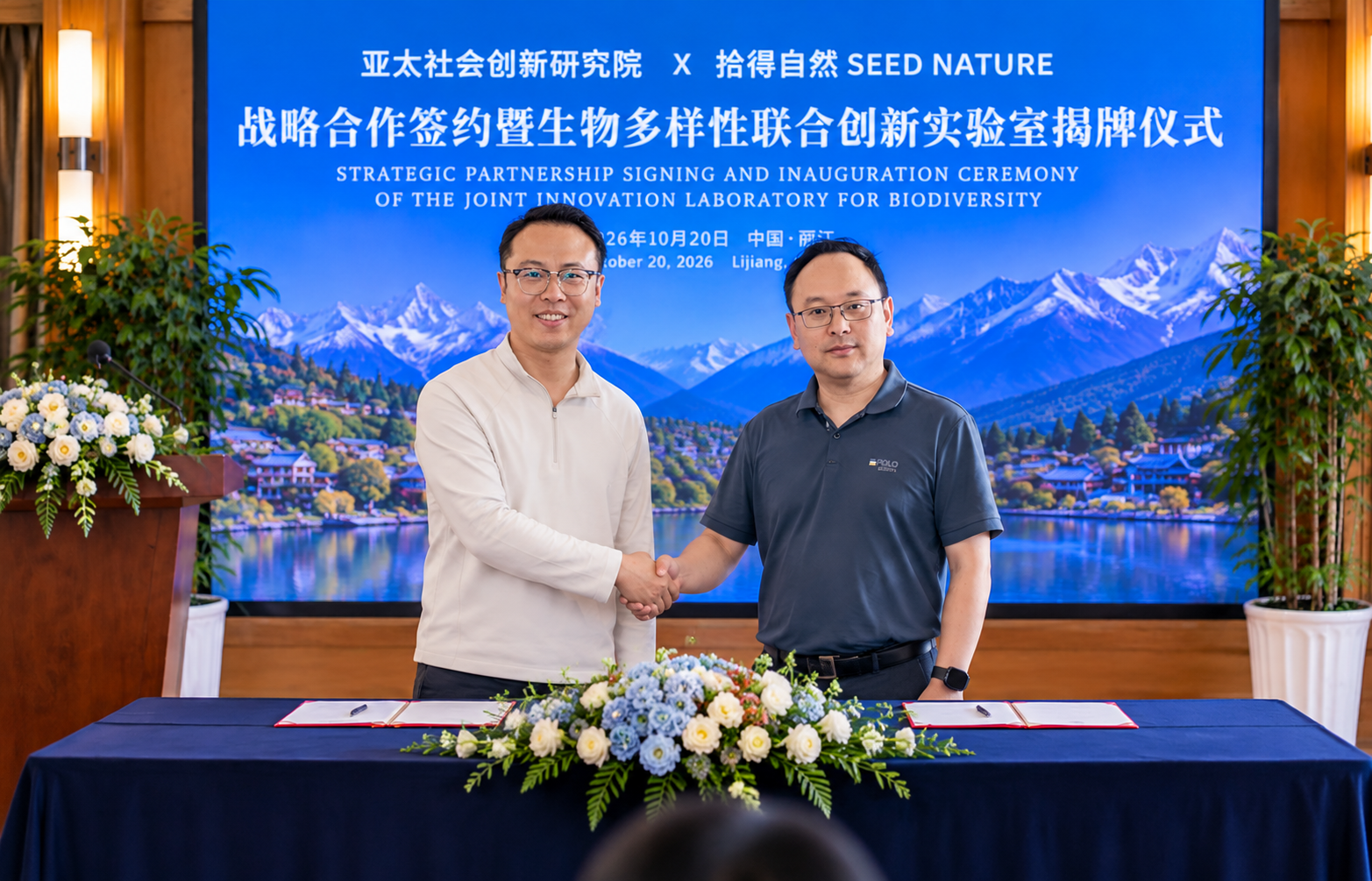
On the morning of October 20, 2026, the Asia-Pacific Social Innovation Research Institute (APSIRI) and SEED NATURE held a strategic cooperation agreement signing ceremony and officially inaugurated the Joint Innovation Laboratory for Biodiversity.
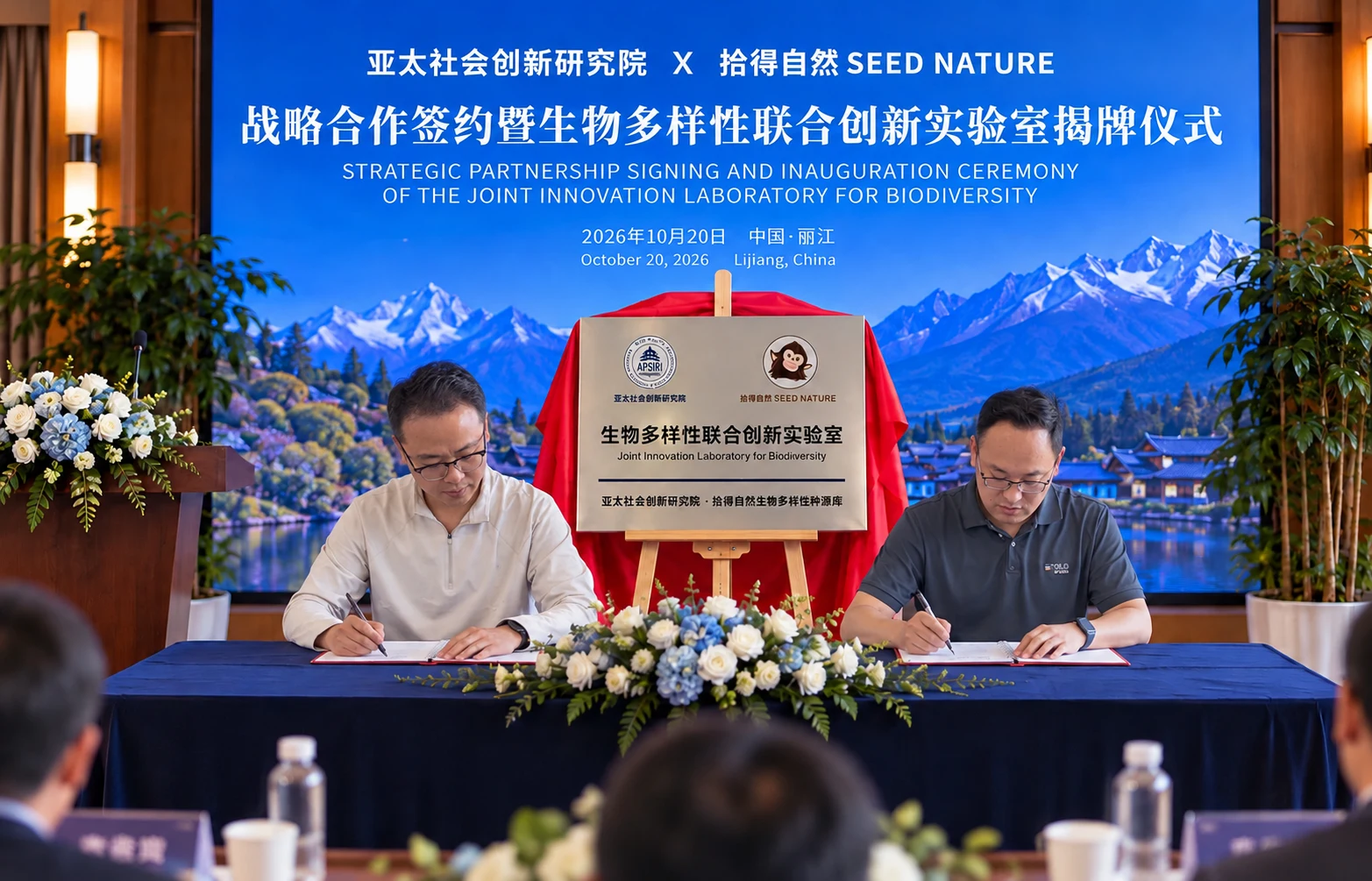
The strategic cooperation agreement was signed by Hongyi Huo, President of APSIRI, and Xingzhi Wei, Chief Executive Officer of SEED NATURE. The two representatives also jointly unveiled the plaque marking the establishment of the Joint Innovation Laboratory for Biodiversity.
Under the agreement, the two organizations will establish long-term cooperation in biodiversity conservation, ecosystem product valuation, green technology innovation, research commercialization, and international academic collaboration.
In addition, both parties have formally agreed to jointly establish a new international academic journal, the Journal of Innovation and Development (JID), further strengthening interdisciplinary research and international scholarly exchange.
The signing ceremony and laboratory inauguration mark the beginning of the implementation phase of this strategic partnership.
By combining APSIRI’s strengths in academic research, international collaboration, and innovation resource integration with SEED NATURE’s extensive experience in ecological conservation, natural science research, and sustainable industry practices, the partnership aims to develop new mechanisms for integrating scientific innovation with industrial development.
Building upon China’s practical experience in ecological civilization and ecosystem product value realization, the collaboration will focus on integrating the value of ecosystem services into economic and social development decision-making, promoting synergies between ecological conservation and green industries, and facilitating the exchange, application, and international dissemination of relevant research findings and Chinese practices across the Asia-Pacific region.
1. Joint Innovation Laboratory Inaugurated to Advance Innovative Approaches to Ecosystem Product Value Realization
Biodiversity plays a fundamental role in maintaining ecosystem stability, safeguarding human well-being, and achieving sustainable development.
As global approaches to environmental governance continue to evolve, understanding the multiple values of ecosystems and translating conservation outcomes into scientific evidence for public policy and socioeconomic decision-making have become increasingly important priorities in international sustainability research.
In recent years, China has actively explored mechanisms for realizing the value of ecosystem products, advancing the accounting and practical application of Gross Ecosystem Product (GEP) in ecological conservation, spatial planning, ecological compensation, and green development.
These efforts have generated valuable practical experience in reconciling environmental protection with economic and social development.
Against the backdrop of the ongoing implementation of the Kunming-Montreal Global Biodiversity Framework, China’s experience in ecosystem valuation, biodiversity conservation, and coordinated green development provides important practical cases for international research into ecosystem services and their policy applications.
The newly established Joint Innovation Laboratory for Biodiversity will take biodiversity conservation as its foundation, with a particular emphasis on ecosystem product valuation and mechanisms for realizing ecological value.
The laboratory will promote interdisciplinary integration across ecological science, environmental economics, innovation management, and sustainable development.
A central objective is to transform China’s practical experience in ecological civilization into research-based knowledge that can be systematically studied, scientifically evaluated, internationally compared, and adapted to different development contexts.
Under the strategic cooperation agreement, the laboratory will concentrate on three major areas of research and practice.
1.1 Ecological Research and Policy Innovation
The two organizations will conduct interdisciplinary research on biodiversity surveys and monitoring, ecosystem conservation and restoration, ecosystem service valuation, and GEP accounting.
Particular attention will be given to examining how ecosystem valuation findings can inform regional development planning, ecological compensation mechanisms, green industrial development, and relevant public policies.
By integrating ecological science with socioeconomic research methodologies, the partnership aims to develop more rigorous approaches to identifying, assessing, and incorporating ecological value into decision-making processes.
These efforts are expected to provide scientific evidence and policy-relevant insights for biodiversity conservation and regional sustainable development.
1.2 Conservation Technology Innovation and Research Commercialization
The partnership will undertake applied research addressing practical conservation needs, particularly in alpine plant conservation, artificial propagation, wild population restoration, and the sustainable utilization of botanical resources.
It will also examine opportunities for connecting conservation outcomes with nature education, ecotourism, and green industrial innovation.
With ecological conservation remaining the primary consideration, the research will focus on institutional mechanisms, technological pathways, and sustainable business models that support the realization of ecosystem product value.
By strengthening connections between scientific research and practical industry applications, the laboratory will explore development models that balance ecological, economic, and social benefits.
1.3 International Research and Application of China’s Practical Experience
The Joint Innovation Laboratory will actively promote international comparative research, case studies, and policy dialogue on GEP accounting, ecosystem product value realization, biodiversity conservation, and the transition towards a green economy.
A key research priority will be to examine the applicability of China’s ecosystem valuation methodologies and policy practices across different regional and socioeconomic contexts.
The partnership will seek to introduce relevant research findings into international academic networks, contributing evidence and practical insights to the development of green transition strategies suited to the ecological characteristics and development priorities of countries across the Asia-Pacific region.
Research Infrastructure and Practical Foundations
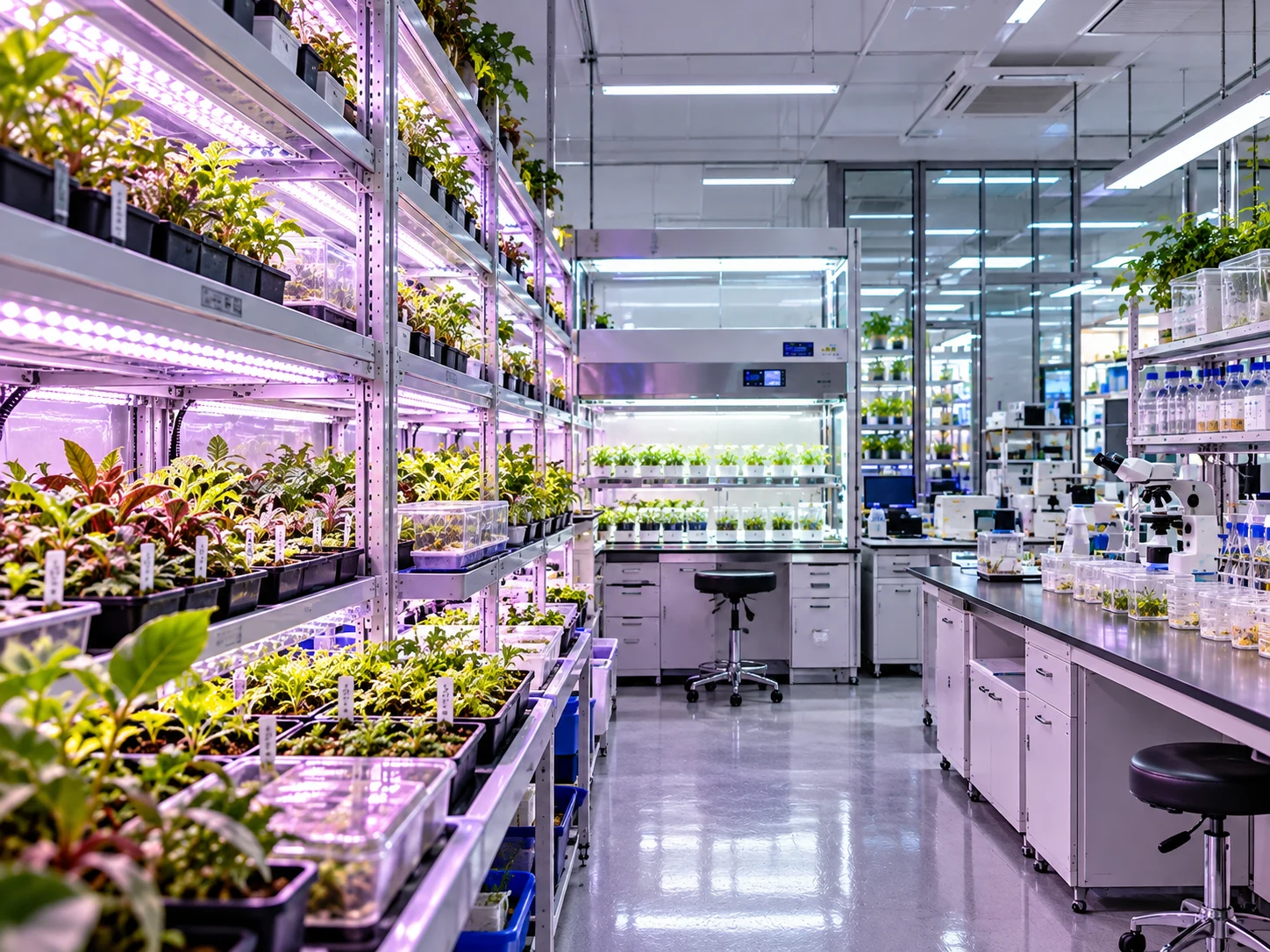
SEED NATURE’s core team has maintained a long-term presence in the Himalayan–Hengduan Mountains region, accumulating more than 13 years of research and practical experience in endangered alpine plant conservation, artificial propagation, wild population restoration, and the sustainable utilization of botanical resources.
The team has established three alpine plant propagation bases and one laboratory, with associated facilities covering approximately 11,000 square metres.
It has also developed extensive practical experience in nature education, ecotourism, and biodiversity conservation.
The region’s exceptional alpine plant diversity, distinctive ecosystems, and rich cultural heritage provide valuable opportunities for research into ecosystem service valuation, biodiversity conservation technologies, and regional sustainable development.
By combining APSIRI’s interdisciplinary research capabilities and international academic networks with SEED NATURE’s conservation expertise and existing research infrastructure, the Joint Innovation Laboratory will progressively advance collaborative research projects, technological innovation, and the practical application of scientific findings.
Remarks by the President of APSIRI
Hongyi Huo, President of APSIRI, stated that China has accumulated significant practical experience in ecosystem product valuation, ecological conservation, and coordinated green development.
He emphasized that transforming these experiences into scientifically grounded research findings that support international comparison and can be adapted to different development contexts represents a central objective of the partnership.
He further noted that the value of ecosystems extends far beyond their immediate economic returns, encompassing their fundamental contributions to ecological security, social well-being, and long-term sustainable development.
“Through this Joint Innovation Laboratory, we hope to connect ecological research, economic valuation, and industrial innovation. Our objective is not only to study how biodiversity can be protected, but also to explore how the value of ecological conservation can be scientifically recognized and more effectively incorporated into public policy and economic development decisions.
At the same time, through international academic collaboration and the dissemination of research findings, we hope to enable more countries across the Asia-Pacific region to gain a deeper understanding of China’s practical experience, while promoting knowledge exchange and mutual learning among different regions.”
2. Joint Establishment of an International Academic Journal to Expand Global Research Networks in Innovation and Development
As another major outcome of the strategic partnership, APSIRI and SEED NATURE have formally agreed to jointly establish the Journal of Innovation and Development (JID), a new international academic journal dedicated to fostering interdisciplinary research and international scholarly exchange.
The journal will focus on innovation-driven development, examining the relationships among technological progress, industrial transformation, institutional innovation, and sustainable socioeconomic development.
It aims to facilitate international academic dialogue on innovation theories, policy research, and evidence-based practices.
Academic Scope and Research Priorities
JID will cover a broad range of interdisciplinary research fields, including innovation management, technological innovation, industrial innovation, sustainable development, green economics, ecological innovation, digital transformation, and social innovation.
The journal will encourage original research that demonstrates interdisciplinary relevance, methodological rigour, and meaningful contributions to academic knowledge and real-world development challenges.
Particular emphasis will be placed on understanding how innovation activities translate into tangible development outcomes, and how technological, institutional, and business model innovations can help address economic, social, and global sustainability challenges.
Academic Governance and Publishing Standards
In developing the journal, both organizations will adhere to internationally recognized standards of scholarly publishing.
They will progressively establish a professional editorial management system, an international academic advisory board, and a rigorous peer-review framework.
Academic quality, research ethics, editorial independence, and publishing transparency will be central principles guiding the journal’s development.
The objective is to provide researchers from different countries and regions with an open, credible, and professionally managed platform for scholarly communication.
International Academic Collaboration
JID will actively seek partnerships with universities, research institutions, academic associations, and professional research networks throughout the Asia-Pacific region and beyond.
Through these collaborations, the journal aims to encourage interdisciplinary dialogue, facilitate cross-regional knowledge exchange, and enhance the international visibility of research addressing practical innovation and development challenges.
Unlike the Joint Innovation Laboratory, which focuses primarily on biodiversity conservation and ecological value research, JID will maintain a broader interdisciplinary academic scope.
The journal will serve the international research community across multiple fields of innovation and development, rather than functioning solely as a publication outlet for the laboratory.
Connecting Research Innovation with Scholarly Communication
Through the coordinated development of the Joint Innovation Laboratory and JID, the two organizations aim to establish complementary platforms supporting research, academic evaluation, publication, and international knowledge exchange.
The laboratory will primarily focus on scientific research, technological innovation, practical validation, and the translation of research findings into real-world applications.
The journal, meanwhile, will provide an independent scholarly platform for academic evaluation, peer-reviewed publication, and knowledge dissemination.
This complementary arrangement is expected to strengthen the partnership’s research capacity in ecological science and green innovation while expanding opportunities for international collaboration across innovation management, industrial development, and sustainability research.
3. Rooted in China, Connected to the Asia-Pacific: Advancing Industry–Academia–Research Collaboration and International Knowledge Exchange
The strategic partnership between APSIRI and SEED NATURE represents an important step towards integrating academic research resources, practical industry experience, and international scholarly networks.
With the Joint Innovation Laboratory for Biodiversity serving as a specialized research platform and the Journal of Innovation and Development functioning as an interdisciplinary academic communication platform, the two organizations will progressively develop a long-term collaborative framework connecting scientific research, practical validation, research commercialization, and knowledge dissemination.
Strengthening Research Collaboration
The partnership will expand engagement with universities, research institutions, and professional organizations in China and internationally.
Areas of potential collaboration include ecosystem valuation, biodiversity conservation, green technology innovation, and sustainable development.
Both organizations will explore opportunities for joint research projects, academic exchanges, talent development, and collaborative research initiatives.
Promoting Sustainable Industry Practices
Drawing upon the ecological resources and research foundations of southwestern China, the partnership will examine the practical application of conservation technologies in nature education, ecotourism, green industries, and community-based sustainable development.
The objective is to identify innovative approaches that support ecological conservation while responding to broader economic and social development needs.
Facilitating International Knowledge Exchange
A central priority of the partnership will be to advance the international academic study and dissemination of China’s experience in GEP accounting and ecosystem product value realization.
By connecting Chinese research findings and practical approaches with the diverse development needs of Asia-Pacific countries, the collaboration aims to promote mutual learning in ecological governance, research methodologies, policy innovation, and sustainable development practices.
Rather than focusing exclusively on individual research projects or technological outputs, the partnership seeks to explore a sustainable model of long-term collaboration between research institutions and enterprises.
By bringing together academic expertise and real-world conservation and industry settings, APSIRI and SEED NATURE aim to facilitate the progression of scientific findings from theoretical research to practical validation and application.
International academic collaboration will further support the systematic documentation, evaluation, dissemination, and adaptation of relevant research findings and practical experiences.
Looking ahead, both organizations will continue to strengthen their strategic partnership and explore open innovation mechanisms involving research institutions, enterprises, universities, and civil society organizations.
These efforts will seek to create stronger connections among biodiversity conservation, ecosystem product value realization, and sustainable industrial development.
Building upon China’s experience in ecological civilization and responding to the sustainable development priorities of the Asia-Pacific region, APSIRI and SEED NATURE will work to advance international research, knowledge exchange, and practical applications relating to ecosystem valuation and ecological value realization.
Through this collaboration, both organizations aim to contribute scientific knowledge, practical experience, and innovative approaches to global biodiversity conservation and the transition towards a more sustainable and resilient future.
⸻
About the Partner Organizations
SEED NATURE
SEED NATURE is an innovative enterprise specializing in ecotourism, nature education, educational travel programmes, and the development and operation of nature-based learning initiatives.
Through ecological research, conservation practices, and sustainable business innovation, the company is committed to advancing biodiversity conservation and green development.
Its core team has accumulated more than 13 years of experience in biodiversity conservation, scientific research, and nature-based educational programmes in China’s Himalayan–Hengduan Mountains region.
Over the years, the team has developed an integrated “Nature+” model centred on natural resource conservation and sustainable utilization.
Drawing upon the region’s rich alpine botanical resources, SEED NATURE has undertaken long-term research and practical initiatives involving endangered alpine plant conservation, artificial propagation, wild population restoration, and sustainable botanical resource utilization.
The team has also explored industrial applications involving alpine ornamental plants, medicinal plants, and aromatic plants.
Currently, SEED NATURE’s core team has established three alpine plant propagation bases and one laboratory, with associated facilities covering approximately 11,000 square metres.
In the fields of nature education and social innovation, SEED NATURE has developed educational programmes in Lijiang, Shangri-La, and Xishuangbanna.
These programmes address a wide range of themes, including alpine plant conservation, plateau wetland and migratory bird protection, Yunnan snub-nosed monkey conservation, astronomical observation, the United Nations Sustainable Development Goals (SDGs), and ethnic cultural heritage preservation.
The team has participated in youth-related activities associated with the 15th meeting of the Conference of the Parties to the Convention on Biological Diversity (COP15).
It has received recognition through the China Ecotourism Awards and has also been recognized among the World Economic Forum’s “Top Innovators”, joining its UpLink global innovation community.
Its conservation and innovation initiatives have attracted media coverage from major Chinese outlets, including Xinwen Lianbo (CCTV News), People’s Daily, and China Daily.
SEED NATURE remains committed to advancing ecological conservation through scientific research and promoting the sustainable utilization of natural resources through innovative practices.
By integrating ecological, economic, and social considerations, the company seeks to develop sustainable approaches that support biodiversity conservation, responsible industry development, and long-term environmental well-being.